Updated 2026-11-18
Title 24, permits, and HERS on a California changeout
Replacing a central air conditioner, a furnace, a heat pump, or a mini-split in California is often a permitted job, and many of those permits pull in Title 24 energy forms and a HERS verification. The climate zone on the forms is the zone the building department assigns. This page is how that process shows up on a quote. The inspector and the current Energy Code are the authorities in your city.
Why a changeout is still a project
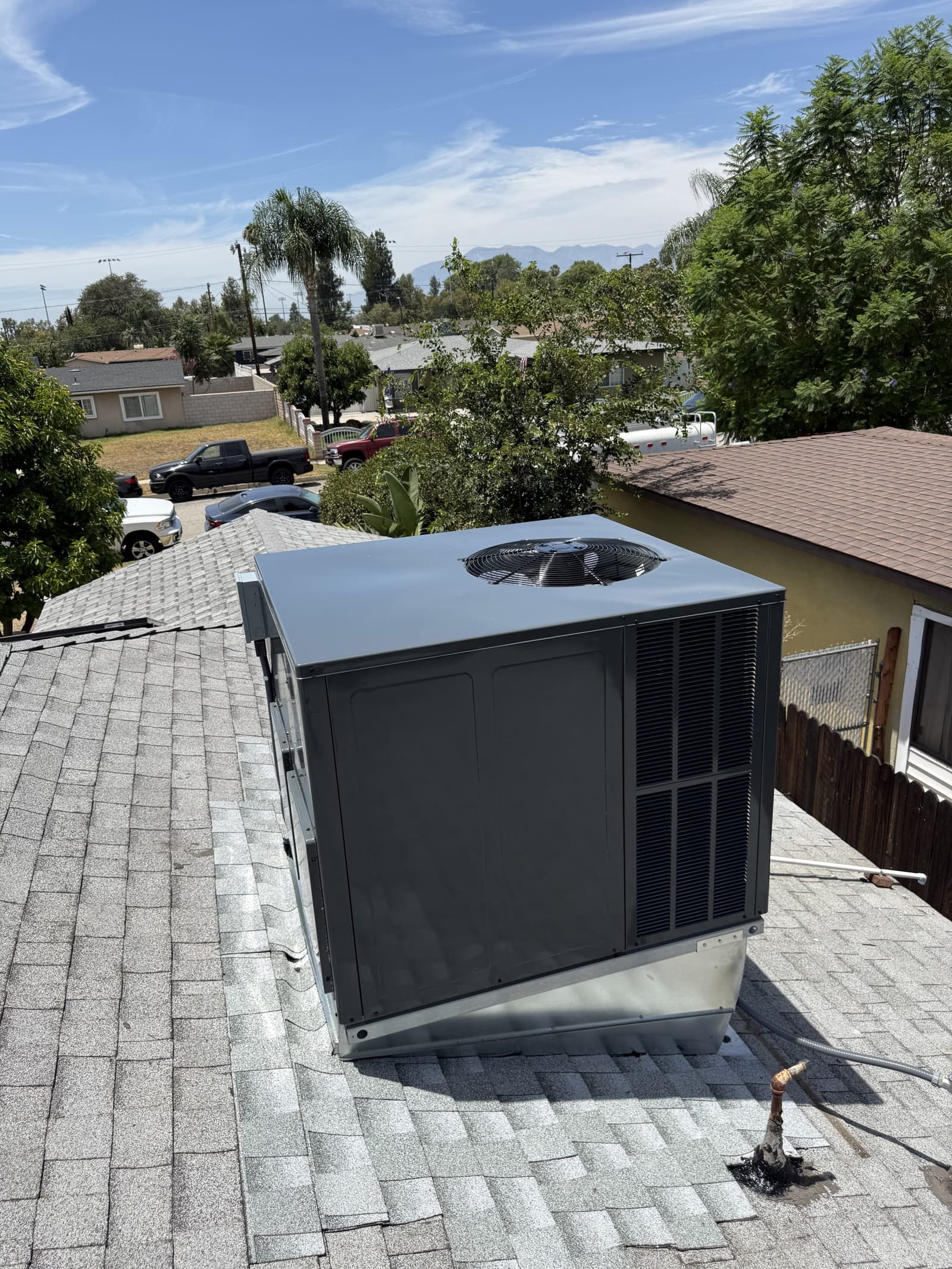
A changeout can look like a swap. The old condenser leaves, the new one lands on the same pad, and the thermostat wires land on new terminals. Cities often treat it as an alteration that has to meet the energy code in force on the day of the permit. Both pictures can be true, and the equipment can sit in the same place, and the paperwork can still be real.
Title 24, Part 6, is the California Energy Code. It sets efficiency, duct-leakage, and verification requirements that show up when the project triggers them. The triggers depend on the scope, and a full system changeout is the common one, and a capacitor is a repair. Replacing an evaporator and a condenser can be a changeout, and we say which one we are pricing, and the permit follows the real scope.
HERS, the Home Energy Rating System, is the third-party check, and a HERS rater tests what the code asks for. On many HVAC changeouts that means duct leakage and, where the code requires it, refrigerant-charge verification or a weigh-in method the code allows. The rater, the installer, and the inspector are three different roles. The quote should say who hires the rater and whether that fee is inside the price, and our fixed prices say so.
The climate zone is assigned
California's energy code divides the state into climate zones with different requirements. People like to announce a zone from a map they found online. The zone on the compliance forms is the zone the building department assigns. Edge addresses and houses near a boundary are where a map and a counter clerk can disagree, and we use the department's assignment.
Weather is still easy to describe without that number. Palm Springs is hotter than Huntington Beach; Beaumont nights are colder than downtown Riverside. Those facts can guide equipment selection, and they are separate from the number on a CF1R. When the form needs a number, the jurisdiction provides it, and the paperwork follows.
The same habit keeps us from sizing equipment from a zone stereotype. Manual J uses the building and the design conditions. Title 24 uses the assigned zone and the forms, and both can be satisfied on one job. The sizing guide is where we talk about load, without inventing a typical-house tonnage in the middle of a permit conversation.
What the forms are doing
The paperwork for a residential alteration commonly includes a certificate of compliance, installation certificates, and a verification certificate after HERS testing. Contractors know them as the CF1R, CF2R, and CF3R series. On a job we permit, you can leave the forms with us. You should still know they exist, so "permit included" can be followed by a fair question: are the energy forms and the HERS test inside the price?
Duct leakage shows up because the code cares whether altered ducts hold air; intact, tested ducts pass more easily than an attic full of open flex. If we already know the ducts will fail a leakage test, the honest quote includes the duct repair. Duct replacement is quoted after we see the job and cleaning leaves the leaks where they are. Mastic and new connections are what seal them, and the test is a number.
Refrigerant verification, where the zone and the scope require it, is a test of the charge by an approved method. The technician and the rater handle that measurement. Your role is to know it may be required and to see it on the quote. A system charged with care passes more quietly than one that needs a second visit to be set right.
Permits are local, and the license is ours
Each city and county building department runs its own counter, its own fees, and its own inspection calendar. Fees go on the quote for the jurisdiction we are actually pulling. Inspections happen on that department's schedule. A crane day on a roof may need the inspector and the crane on speaking terms, and we build the quote with that in mind.
The license on our HVAC permits is CSLB #1162322. You can confirm it on the CSLB license check, and we hope you do. An install that skips the permit looks cheaper until the house is sold, the system fails, or someone gets hurt. We permit the work that requires a permit.
Owner-builder permits are a legal path in some cases and a rough fit for most of the jobs we see. If you pull the permit yourself, you take on the obligations the building department assigns to the permit holder. We would rather be the contractor of record on work we install. If a bid asks you to pull the permit so the contractor can skip the paperwork, read that bid again.
Changeouts, repairs, and the line between them
Replacing a failed capacitor, contactor, fan motor, igniter, or flame sensor is a repair. Repair visits are quoted after we see the job. Those parts, by themselves, stay off a Title 24 changeout. Replacing the condensing unit and the coil, replacing a furnace, replacing a package unit, or adding a mini-split is the kind of scope cities permit, with energy forms when the code says so.
A like-for-like swap is still often permitted. Like for like means the new equipment serves the same house; efficiency minimums still apply. In the Southwest, a split air conditioner installed on or after January 1, 2023 has to meet the SEER2 and EER2 floors in the SEER2 guide. SEER2 comes from the M1 test, a different rating from old SEER, and the forms are where that rating has to be real.
Mini-splits are permitted mechanical work even without ducts. An ADU head still needs a permit path, and the zone price is on the mini-split quote. VRF work is permitted too, and the EPA timeline for variable refrigerant flow has shifted, so those quotes confirm the current EPA text before equipment is ordered. The permit fee, whatever the city charges, is a line we can name after we know the city.
HERS in the attic, in practice
Duct testing needs access, and the rater has to reach the air handler, the return, and a place to measure. An attic packed with furniture, a hatch painted shut, and a crawlspace nobody has entered in years turn a simple verification into a second trip. Clear the access before installation day, and if the access is missing, the quote has to create one, or the test cannot happen. We would rather write that into the price than discover it at noon.
Leakage-test failures have ordinary causes. A missing collar screw, a plenum seam that was never sealed, a return platform open to a wall cavity, a register boot that dropped. Fixing those is the job, and if the existing ducts are too far gone, replacement is the path that can pass. A ruined branch is better replaced than buried in mastic.
Refrigerant-charge verification fails when the airflow is wrong, not only when the charge is wrong. A loaded filter, a dirty coil, or a blower speed set for a different coil will move the measurements. A brand-new system with a filthy return from the old closet can fail a test the equipment was capable of passing. Startup includes setting airflow.
What you should see on the quote
Look for the permit jurisdiction, whether energy forms are included, whether HERS is included, and what happens if a test fails because of existing ducts. Look for the license number, the equipment model, and the SEER2 rating the forms will repeat, and look for exclusions: panel upgrades, roofing, drywall, and a crane if the unit is on the roof. The price is fixed before work for the scope that is written, and a failed test caused by a scope we included is ours to fix. A failed test caused by ducts you asked us to leave, after we noted they would fail, is a scope change, and we reprice before we continue.
Someone needs to be home for the inspector, or a lockbox plan needs to be real. A job that cannot be inspected cannot be closed out. We wait for the inspector's result before anyone calls the inspection done.
Next Era is based in Rancho Cucamonga, and hours are Monday-Saturday, 7:00 AM - 8:00 PM, Sunday, 7:00 AM - 4:00 PM, so call (951) 713-7529. We service Goodman, LG, Carrier, Trane, and more, and we permit the work under CSLB #1162322, so bring the city and the address. The climate zone conversation starts at the building department, and the equipment conversation starts at the house. This is the homeowner version, not a filing.
System Replacement
Mini-Splits
AC Installation
Furnace Installation
Questions
Does every AC repair need a Title 24 permit?
Can I tell you my climate zone from a map I found?
Who hires the HERS rater?
Will you skip the permit if I sign a waiver?
Based in Rancho Cucamonga
Ready for a fixed price?
Call us, or send a note. You hear the price before we start.