
costs · Next Era HVAC Team
What a seasonal tune-up includes
The seasonal tune-up is one seasonal visit for the filter, the coils, a refrigerant check, the electrical parts that fail in this heat, the thermostat, and a written note. It is maintenance on a system that still runs, and a system that is already down is a repair visit.
The filter and the slot
We pull the filter and look at the slot it sits in. A filter loaded with corridor dust is restricting the blower. A filter of the wrong size is bypassing. A high-MERV one-inch pleat in a shallow slot can starve a coil that was fine with a coarser pad. We tell you the size and whether the MERV rating you chose is one this blower should pull. The indoor-air guide is the longer version. The tune-up is the look at your actual slot.
If you have no filter, or the filter door is open and air is sneaking around the rails, that is a finding. The coil downstream is where that air lands. We are not selling you a carton of filters from the truck as the visit. We are telling you what fits. Bring the size you have been buying if you want us to confirm it.
The coils
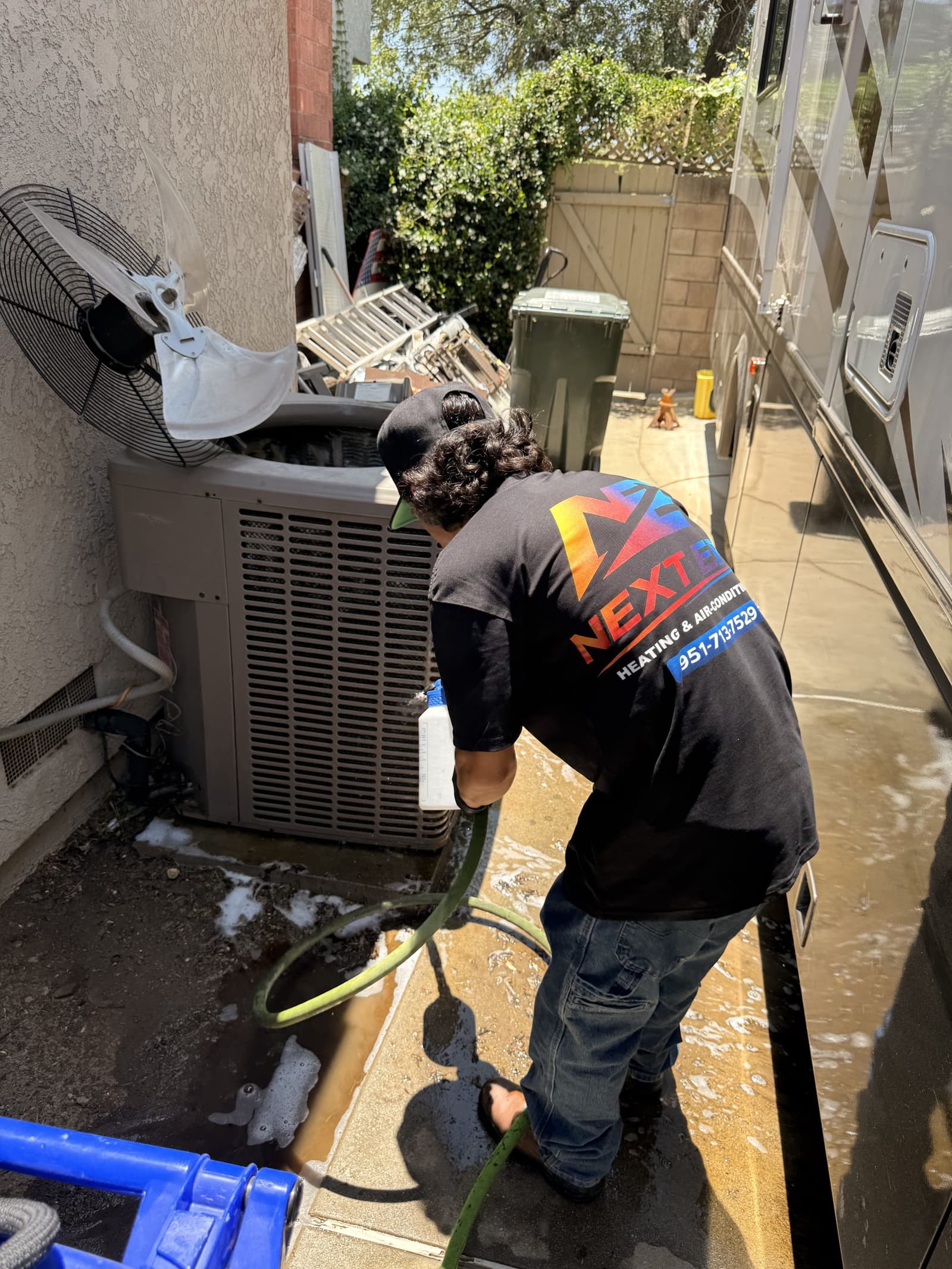
The outdoor coil is where July fails when the fins are packed. We look at it and we wash it when it is loaded. Dust from Fontana, Ontario, and the warehouse corridors, cottonwood, and the grit left after a wind event all count. A coil that looks "a little gray" can still be blocked deep in the fins. Washing is ordinary maintenance. It is also how we avoid condemning a compressor that is only running hot because it cannot reject heat.
The indoor coil gets a look too. A dirty evaporator restricts air and holds odor. If the coil is accessible and the scope of the visit can clean it, we clean it. If the coil is buried behind a wall of duct and a real cleaning means a different scope, the summary says so and the price for that work is separate and fixed before we do it. We do not spray a perfume into the return and call the coil clean.
The refrigerant check
A refrigerant check is a measurement and a note. It tells us whether the system is in a normal range for the temperatures that day, or whether it is low. Low means a leak. The tune-up does not include adding refrigerant to an unrepaired leak. That practice brings the same call back next season and vents a gas with a global warming potential near 2,090 if the system is R-410A.
Existing R-410A systems can be serviced. The service is a repair, quoted before we open the circuit, when a repair is what the visit becomes. If the system is flat or iced over, the tune-up price is the wrong price. Call it as a repair. A2L refrigerants used in new equipment are not a drop-in for R-410A, and the tune-up will not mix them.
Electrical and the thermostat
Capacitors, contactors, the disconnect, and the connections in a hot attic are the electrical items that fail after a season of heat. We check them. A capacitor that is already out of range gets a price for replacement before we replace it. The tune-up finding and the repair are two steps, even when they happen on the same visit. You hear the repair price and you approve it. That is the fixed-price rule, applied to a two-dollar-looking part that is not a two-dollar part once the truck and the labor are real.
The thermostat gets checked against the equipment. A heat pump that is configured as a furnace will run electric strips and ignore the compressor. A system set to fan-on will run the blower forever and hide a weak temperature split. We note the mode, the schedule if it is extreme, and a missing common wire if a smart thermostat is browning out. A free smart thermostat comes with a complete system install, not with a tune-up. A standalone thermostat swap is its own quote.
The written summary, and what is not in the price
You get a written summary of what we saw and what, if anything, needs a repair. That summary is the product of the visit as much as the coil wash is. It is what you use when you decide whether to plan a replacement or to keep the system on a maintenance rhythm. It is not a forty-point form that exists to impress a spreadsheet. If an item is not relevant to the equipment in the attic, it does not get a fake checkmark.
The seasonal tune-up is not a duct replacement, a panel upgrade, a condenser replacement, or a chemical air treatment. Duct cleaning is quoted after we see the job when the ducts are intact and dirty. Duct replacement is quoted after we see the job when they are crushed or disconnected. Those are different quotes. The Comfort Club plan is $24.99/mo or $299.88/yr, with two visits, 15% off repairs, and a $49 member diagnostic fee. Parts on the plan are still quoted separately. Restrictions may apply. Call for details. These offers have no end date.
The plan is not insurance and it is not a warranty. We do not describe it as either. If the system is already dead when you call, the visit is a repair. The tune-up is for a system we can maintain.
When to book it
Book the cooling visit before the first heat wave, not during it. April and May are when a weak capacitor can be replaced without a house full of people waiting. Book the heating visit before the first cold night if you are in Yucaipa, Beaumont, Banning, or the foothills. Coastal Orange County can lean on the cooling visit and still deserves a look at corrosion on the contactor and the fins.
Call (951) 713-7529, Monday-Saturday, 7:00 AM - 8:00 PM, Sunday, 7:00 AM - 4:00 PM. Have the filter location and the gate code ready. If you just moved in, ask about a first visit and we will tell you what applies. Restrictions may apply.
Questions
What should a homeowner know about this: The filter and the slot?
What should a homeowner know about this: The coils?
Based in Rancho Cucamonga
Ready for a fixed price?
Call us, or send a note. You hear the price before we start.