
seasonal · Next Era HVAC Team
What July attic heat does to an Inland Empire air conditioner
The yard in July is hot, and the attic above a Rancho Cucamonga, Fontana, or Riverside hallway is hotter still. That is where the furnace, the coil, and the flex live, which is why the upstairs fades before a bigger condenser will help.
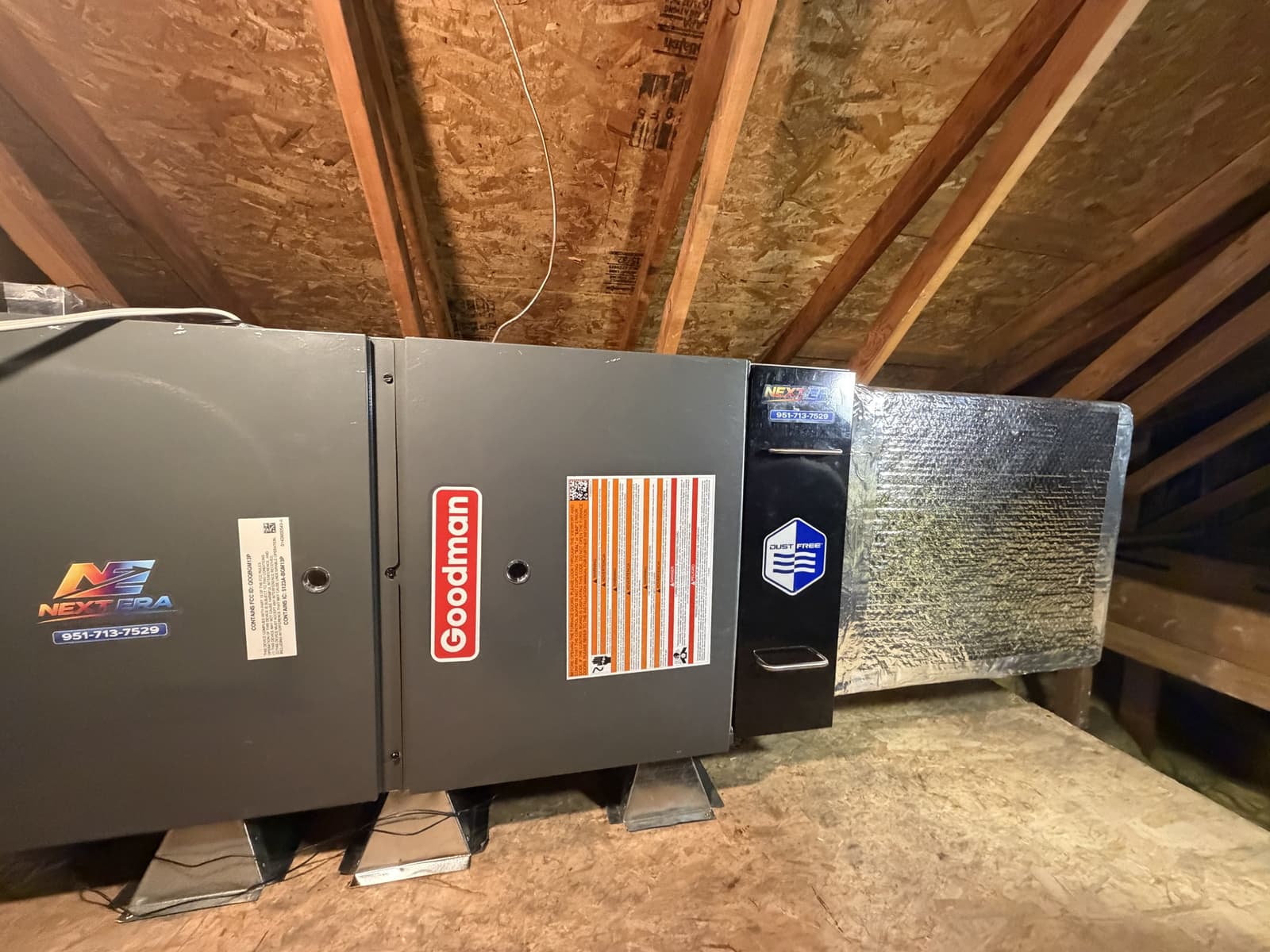
The attic is the job site
A condenser in the side yard rejects heat to outdoor air. The indoor coil and the blower reject nothing. They sit in an attic that has been under a dark roof since morning. By late afternoon the air around the air handler is far above the temperature on the patio. Capacitors on the blower and on the condenser are both stressed, and the one in the attic has been baking longer. The first week of real heat, the week that jumps from the low 90s into the low 100s, is when marginal capacitors open.
Flex duct in that attic gains heat on every foot between the plenum and a far bedroom. Insulation on the duct slows the gain. It does not cancel a run that has sagged into a flat oval or slipped off a collar. If the collar is off, the bedroom is not receiving air at all. The hall register still blows, the thermostat in the hall is happy, and the room over the garage is the one everyone argues about at 6 p.m.
This is ordinary construction for tract houses from the 1980s through the 2010s. It is not a defect unique to one brand. Goodman, LG, Carrier, Trane, and the other names on these cabinets all sit in the same attics. We service them. The logo does not change the attic temperature.
What the upstairs is telling you
A second story fails first because it has a hot roof, a long duct, and usually a thermostat downstairs. Ontario Ranch, Eastvale, Chino Hills, and the two-story plans in Fontana repeat the same bedroom-over-the-garage complaint. The supply run is the longest one in the attic. It is also the run most likely to have a kink where the flex drops through a truss. Measuring that run is the diagnosis. Guessing that the house needs another half ton is how the downstairs becomes a refrigerator and the bedroom stays warm.
Closing registers in empty rooms to force air upstairs raises static pressure. The blower is already working against a filter, a wet coil, and undersized flex. More pressure means less total air, a colder coil, and sometimes ice. The bedroom does not win that trade. Open the registers back up and have someone look at the duct.
If the whole house climbs together, and the outdoor unit is running, the problem may be capacity, charge, or a coil that cannot reject heat because the condenser fins are packed. Those are system problems. They still get diagnosed before anyone orders a replacement. AC repair is quoted after we see the job. A full system replacement is quoted after we see the job when the equipment is actually done.
Dust, roofs, and the coil that cannot breathe
July is also when corridor dust finishes the job it started in May. Fontana, Ontario, Jurupa Valley, and Perris put a film on condenser fins. A coil that could reject heat in April cannot reject it when the fins are matted and the outdoor air is 102°F. Head pressure climbs. The compressor works harder. The indoor supply gets less cold. From the sofa this feels like "the AC is old." From the side yard it looks like a coil that needs to be washed.
A hose on the outside of the unit, with the disconnect off and your hands out of the fan, is a reasonable homeowner step for loose debris. It is not a substitute for a coil that is packed deep in the fins, and it is not a reason to open the electrical panel. If the unit is louder than last month or it shuts off on the hottest hour, leave it and call. The seasonal tune-up includes a look at the coils. The Comfort Club plan is $24.99/mo or $299.88/yr if you want that look on a schedule before July, not during it.
Roof color and insulation change how fast the attic climbs. They do not change the fact that the equipment lives there. A house with a newer cool roof and tired ducts can still have a hot bedroom. A house with a dark roof and intact, tight flex can still cool. We look at both before we talk about tonnage.
What to check before you buy a bigger system
Look at the filter. A loaded one-inch pleat, especially a high-MERV pleat in a shallow slot, starves the coil and makes a capable system look small. Check it monthly in July. Look at the outdoor unit from a safe distance and see whether the fins are matted or whether something is blocking the discharge, a new fence, stored lumber, or grown shrubs. Look at whether the indoor blower is running when the thermostat calls. If the blower is quiet and the outdoor unit is loud, or the reverse, say so when you call. Those facts save the first half hour.
Do not add refrigerant from a hardware-store can. A system that is low is leaking. Existing R-410A can be serviced by a technician. A2L refrigerants are not a drop-in, and there is no charging procedure on this site. Do not jumper a float switch to stop a pan from overflowing. The pan is overflowing because the drain is blocked or the coil is iced. Turn the system off if the coil is a block of ice, let it thaw, and call.
If the equipment is old and the repair price approaches a replacement, ask for both numbers. We do not use a percentage rule. We write a fixed repair price and, when it belongs, a fixed replacement price. Every complete install includes a free smart thermostat. The quote names the model.
A sizing conversation that can wait until the attic is honest
Manual J sizes a house from glass, orientation, insulation, and climate. A hot upstairs in July is often one bad duct on a system that is already the right size. Replacing the condenser and leaving that duct repeats the complaint, so duct replacement is the visit when the run is the job. Cleaning intact ducts leaves a fallen collar for a replacement.
The Southwest SEER2 minimums still apply when you replace the system. Under 45,000 Btu/h, a split air conditioner installed here on or after January 1, 2023 has to meet 14.3 SEER2 and 11.7 EER2. SEER2 is the current test, and the old SEER number is a different one. None of that math cools a room that is disconnected from the system.
Call (951) 713-7529, Monday-Saturday, 7:00 AM - 8:00 PM, Sunday, 7:00 AM - 4:00 PM. If you call in a heat wave, say whether the outdoor unit is running, whether the blower is moving air, and which floor is hot. In July the useful time in the attic is the morning.
Questions
What should a homeowner know about this: The attic is the job site?
What the upstairs is telling you?
Based in Rancho Cucamonga
Ready for a fixed price?
Call us, or send a note. You hear the price before we start.