
city · Next Era HVAC Team
The first summer in a new Inland Empire house
The first summer in an Inland Empire house is when the equipment the seller or the builder left behind meets a real heat wave. June is the month to find the filter and have the system looked at, before July fills the board.
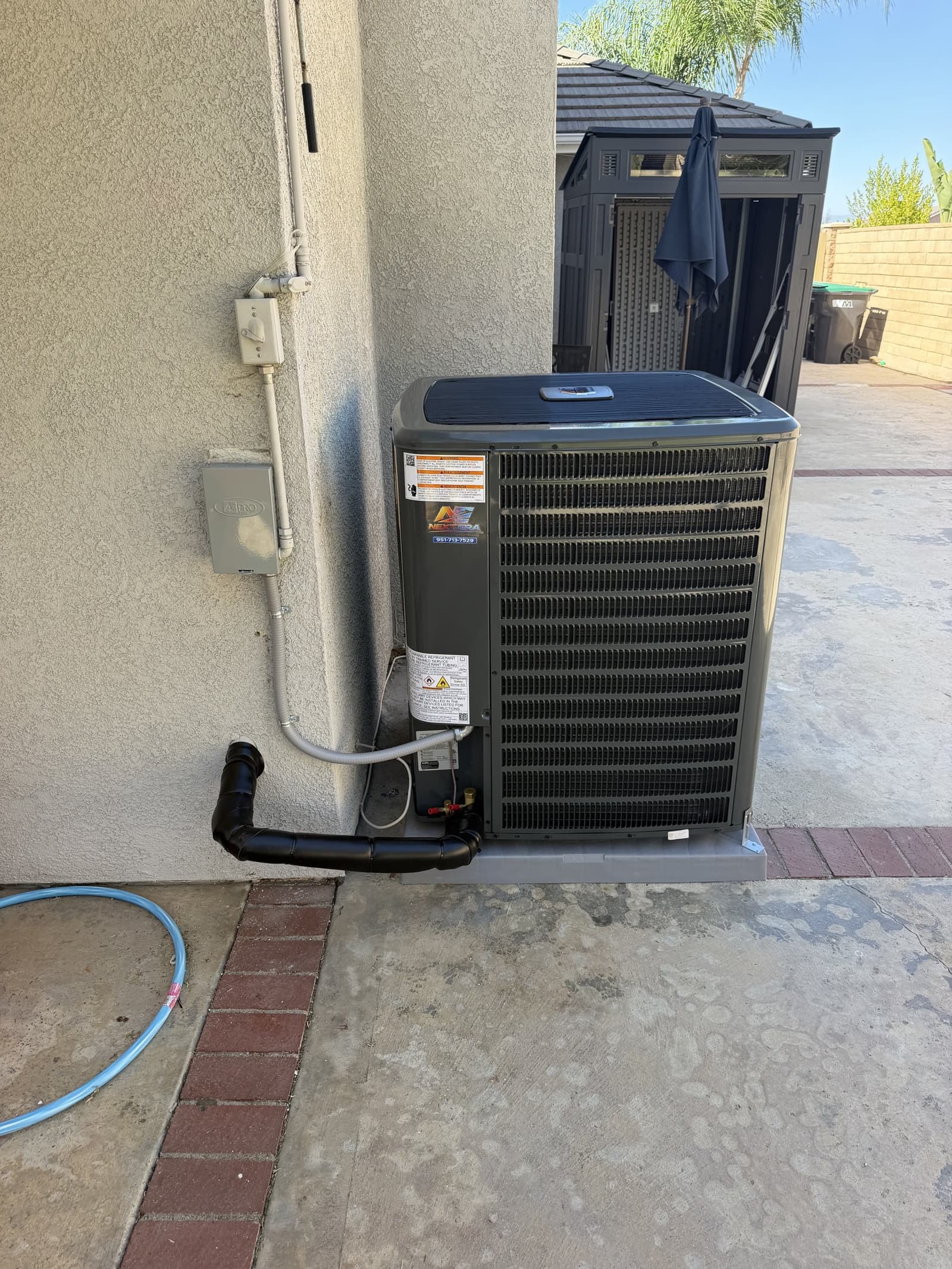
Find the equipment before you need it
Walk the house on a mild morning. The outdoor unit is on a pad in the side yard or, on some roofs, on a curb. The furnace or air handler is in the attic, a hallway closet, or the garage. The filter is at the air handler, in a hallway grille, or in a slot you will not notice until the blower starts whistling. Write down the filter size. Write down the manufacture date on the outdoor data plate if you can read it without opening an electrical panel. A photo of the plate is enough.
Learn the shutoffs. The disconnect at the outdoor unit and the breaker in the panel are the two that matter in a no-cool emergency. You do not need to open the condenser. You need to know how to turn it off if it is grinding or if a coil is freezing. Find the condensate drain if it is visible, often a PVC line at the air handler or a termination outside. A slow drain is how a pan overflows on a humid afternoon or after a coil has been dirty for years.
If the house has two systems, label which thermostat serves which floor. New owners of two-story tracts in Ontario Ranch, Eastvale, and Menifee spend the first heat wave cooling the wrong floor because the thermostats were never marked. A piece of tape on the wall plate is a better tool than a new condenser.
Builder equipment and older equipment fail differently
A house built in the last decade often still has the builder's furnace, coil, and condenser. Those systems are not expired because you just bought the house. They do have builder duct layouts: long flex runs, a single return for a large second floor, and a bedroom over the garage at the end of the worst run. The first summer reveals the layout. It does not automatically require a replacement. Duct replacement is quoted after we see the job when a run is crushed. A tune-up is the right first spend when the equipment is young and simply dirty or poorly filtered.
An older house in Fontana, Montclair, Riverside, or Claremont may be on its second or third condenser and its original ducts. The seller's disclosure is a start. The data plate is better. A system from the R-410A era can still be serviced. The refrigerant transition is not a reason to scrap it during your first month. Repair is quoted after we see the job if something has failed. Replacement is quoted after we see the job when the diagnosis says the system is done. Ask for both numbers rather than accepting the seller's story that "it just needs a recharge."
Warranty questions belong to the manufacturer and the installing contractor's paperwork. We service Goodman, LG, Carrier, Trane, and more. That list is not a dealer claim, and it is not a promise that we administer a warranty we do not hold. Bring the paperwork if you have it. We will still fix the equipment if you do not.
Registers, filters, and the habits that create hot rooms
Open the registers. Previous owners close them in unused bedrooms and spare baths, and the new owner inherits a system that is fighting itself. Closed supplies raise static pressure, make the blower loud, and can ice the coil. If a room is genuinely unused, leave the register mostly open unless a technician has measured a reason to throttle it. Doors that seal tightly against carpet starve a room of return air. An undercut or a jumper path is the fix, not a larger compressor.
Set the filter habit in the first week. Check it monthly during the first summer. Dust from moving boxes, plus whatever the ducts already held, loads a filter faster than a settled household. A high-MERV one-inch filter in a shallow slot is a common upgrade that backfires. Use a filter the blower can pull. The MERV guide explains why a 5-inch rack is a different object from a one-inch pleat. Ask about current offers if you are replacing the system. A rack on a system that is staying is a quoted modification. Restrictions may apply.
Thermostat schedules copied from a milder city will annoy you here. A deep afternoon setback on a 100°F day asks the system to recover at the worst hour. Set a temperature you can live with and let the equipment run. A smart thermostat is included free on a complete install we do later. It is not required to survive the first summer.
The new-homeowner visit
The new-homeowner offer is published as an invitation to have the system checked before it becomes a surprise. The offer does not name a dollar amount. Ask what applies. The seasonal tune-up is the published single visit: filter, coils, a refrigerant check, electrical, thermostat, and a written summary. The Comfort Club plan is $24.99/mo or $299.88/yr, with two seasonal visits, 15% off repairs, and a $49 member diagnostic fee. Restrictions may apply. Call for details. These offers have no end date.
The written summary is what you want in your first summer. It says whether the capacitor is tired, whether the coil is packed, whether the charge looks like a leak, and whether a duct is disconnected. Those findings are prices, fixed before work, not a speech about a new system. If the summary says the system is sound, you have a baseline. If it says the evaporator is leaking and the equipment is twenty years old, you can plan a replacement before July instead of during it.
A refrigerant check that comes up low is a leak, not a welcome gift of "a little Freon." If the charge is low, we find the leak before we add refrigerant. Turn an iced system off and call.
What the first heat wave is for
Use the first hot week as information: which room fails, what time, whether the outdoor unit is running, whether the blower is moving air, and whether the supply air is actually cool. A room that fails at 5pm and recovers by 9pm is often a duct and attic-heat problem. A house that never cools, with warm air at the supply, is a repair, and those notes beat a door-hanger quote.
If a technician you did not call rings the bell in your first week, you can wait. A free second opinion is available if someone has already told you the system is finished. A free replacement estimate is available if you are ready to compare equipment. You can hear the number and still decide later.
Call (951) 713-7529, Monday-Saturday, 7:00 AM - 8:00 PM, Sunday, 7:00 AM - 4:00 PM. Tell us the city, the age of the outdoor unit if you photographed it, and whether anyone is living through a renovation. Drywall dust in a new owner's ducts is a cleaning conversation when the ducts are still connected.
Questions
What should a homeowner know about this: Find the equipment before you need it?
What should a homeowner know about this: Builder equipment and older equipment fail differently?
Based in Rancho Cucamonga
Ready for a fixed price?
Call us, or send a note. You hear the price before we start.